Opening Notes
In the fast-paced world of IoT and embedded systems, the choice of interface standard is key. Mini PCIe has become the gold standard for compact, high-performance solutions, replacing the older Mini PCI with a faster, more reliable, and scalable serial architecture.
What are PCI and Mini PCI?
PCI (Peripheral Component Interconnect) was a parallel bus created in the 1990s to connect internal peripherals. Over time, Mini PCI emerged, a compact version adapted for laptops and embedded systems, facilitating internal expansion and the use of wireless modules.
What is PCI Express (PCIe)?
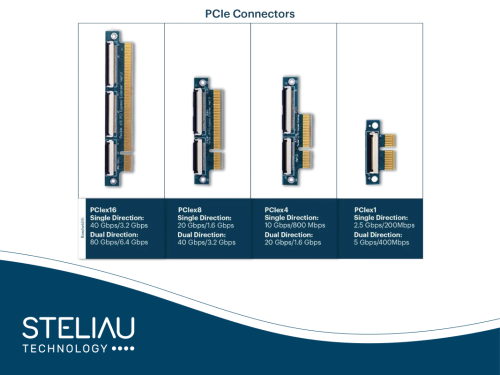
PCIe (PCI Express), introduced in 2003, replaced PCI's parallel architecture with a point-to-point serial design, improving speed, efficiency, and stability. It has evolved through generations (from PCIe 1.0 to 6.0), doubling its performance with each version.
What is Mini PCI Express (Mini PCIe)?
Released in 2005, Mini PCIe combines the compact size of Mini PCI with the speed of PCI Express. Its serial design, low power consumption, and USB compatibility make it ideal for laptops, embedded systems, and IoT devices. It supports Wi-Fi, Bluetooth, LTE/5G, GPS, SSDs, and more.
Mini PCIe Card Sizes
There are two main form factors:
Advantages of Mini PCIe
- High speed and low latency thanks to the PCIe architecture.
- Compact form factor, ideal for portable devices.
- Energy efficiency, perfect for mobile applications.
- Versatility, supporting multiple protocols and peripherals.
Applications in Embedded IoT
Mini PCIe is key in applications such as:
- Wireless modules (Wi-Fi, LTE, 5G, Zigbee).
- Edge computing and AI accelerators.
- Local storage (mPCIe SSDs).
- Industrial sensors and control.
- Security and cryptography modules.
Conclusion
Mini PCIe symbolizes the evolution toward more powerful and efficient interfaces in smaller spaces. Its adoption in IoT, industry, and embedded computing demonstrates that the most lasting innovation comes from intelligent design optimization.